“Card seed” search results (200)
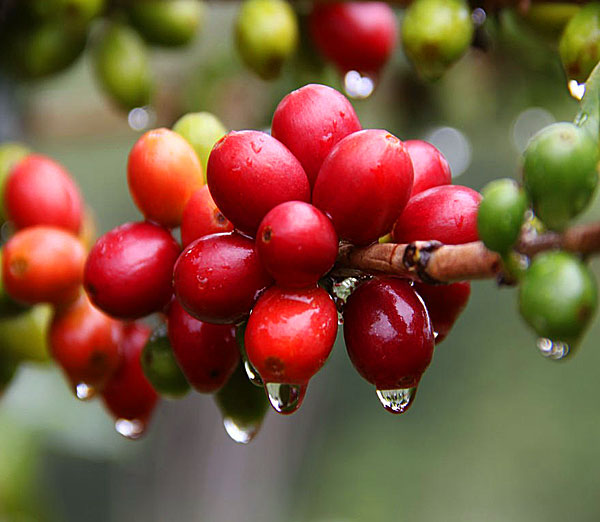
History of Arabica beans Arabica bean varieties derived from Arabica beans
The origin of the historical Arabica species (Coffea arabica) is the Abyssini Arabica sub-plateau (Abyssinia, now known as the Ethiopian plateau) in Ethiopia. In the early days, it was mainly eaten as medicine (Islamic monks used as a secret medicine to cure the body and mind or to awaken the brain), developed the habit of baking and drinking in the 13th century, and passed through the Arab region in the 16th century.
2016-03-22 Rabbi Kadou History Source Variety Card species Coffea
Coffee knowledge the growth trainee of coffee trees
Coffee trees belong to the evergreen family of Akanaceae. They are tropical plants that are not cold. Most of them are planted in areas with elevations of 300,400m, and also in highlands with elevations of 2000-2500 meters. But those who plant on slopes above 1500 meters above sea level have better quality. Coffee trees are most suitable for growth when the average temperature is about 20 degrees Celsius, the annual precipitation is 1500-2000 mm, and the soil is permeable.
2016-07-30 Coffee knowledge growth apprenticeship coffee belong to Akka Nakai evergreen tropical
Arabica Coffee Bean Coffee Manor introduction Arabica Coffee Manor
The origin of the Arabica species (Coffea arabica) is the Abyssini Arabica subplateau (Abyssinia, now known as the Ethiopian plateau) in Ethiopia. In the early days, it was mainly eaten as medicine (Islamic monks used as a secret medicine for physical and mental therapy or for awakening the brain), developed the habit of baking and drinking in the 13th century, and passed through Allah in the 16th century.
2016-07-11 Rabbi coffee beans coffee manor introduction rabbi card species Coffea a
What is the development trend of coffee use in the types of coffee trees?
The shape of Arabica bean is small, the front is long oval, the middle crack is narrow and tortuous, and the arc on the back of the bean is flat. Arabica coffee is grown in Brazil and Colombia in South America, Central America, Costa Rica in the Caribbean, Guatemala, Jamaica, Mexico and Ethiopia. Arabica coffee beans are large, uniform in size and color.
2016-06-12 Coffee category which rabbi card bean-shaped smaller oval middle
Introduction of Yunnan Coffee Bean varieties the difference of hand-flavored flavor and taste between Yunnan iron pickup and small-grain coffee
"Yunnan Tiebika Typica Tibica / Tippika / Tippika Criolla Coffee Peas | Typica teacher Coffee Raw beans w.kaf.name" in recent years, the local government has also fully recognized the importance of the protection and development of ancient coffee varieties in Yunnan, and put coffee as a priority.
2023-03-01 Yunnan pickup coffee small grains flavor taste characteristics introduction Tiebi
Red Kaduai Red Catuai of Tianyi Manor in Nicaragua planting area
The planting conditions in Nicaragua are not inferior to those in Central American countries. Shaded coffee is grown at high altitudes. It tastes round and balanced with less sharp acid. The main unknown factor is war and hurricanes, which make a single farm unsustainable. There is no historical data for raw bean merchants to track and check farm data until after 2003, the bad factors of coffee quality are removed and backward intercourse.
2016-06-19 Nicaragua planting region providence Manor Red Card Duai Red Cat
Introduction of Arabica Coffee grown in Uganda by washing treatment
Uganda began to introduce Arabica coffee trees in 1900, while the northern Bugisu areas along the Kenyan border can produce higher quality coffee. under normal circumstances, a coffee fruit contains two slices of coffee beans. Small round beans (also known as "single cell beans") are produced in the case of mutation, which turns into a single bean when the fruit is ripe. This oval bean.
2016-06-22 Washing treatment Uganda planting rabbi card seed coffee introduction 1
Coffee beans of fine coffee
And after the ground coffee beans are placed, the carbon dioxide and fragrance inside the coffee beans will disappear all the way. When the coffee powder is extracted and filtered in this way, the coffee powder should be expanded and no matter what, you can't make the coffee. The trick is to consider which purdah lessons to be consistent, so brewed coffee is the most delicious and mellow. Small round dark brown coffee beans, dark in the grinder
2014-09-04 Coffee knowledge boutique coffee coffee beans
Delightful medium mellow malic acid of Nicaragua Manor, Nicaragua.
Boutique coffee (specialty coffee) is also called specialty coffee selection coffee. It refers to coffee made from a small number of raw beans with excellent taste grown in an ideal geographical environment. Depending on the special soil and climatic conditions in which they grow, they have outstanding flavor. After strict selection and classification, this kind of coffee is hard in texture, rich in taste and stylish.
2016-06-24 Nicaragua providence Manor Red Card du Aiping Fruit Acid
Understand the coffee culture and development in Australia
Coffee is everywhere in Australia, and the Australian nation is also one of the most coffee-loving nations in the world. They even think they love coffee more than anyone else. Australia's coffee culture is not only the upper-class play of the petty bourgeoisie in the center of the city, nor is it just a business game for tourists along Australia's golden coastline, it permeates the towns dotted all over Oceania.
2016-06-07 Understand Australia coffee culture development coffee ubiquitous nation
Coca Cauca Lazimus Manor introduced in Colombian boutique coffee producing area
Cauca province is similar to other southwest producing areas, the precipitation shows an obvious unimodal distribution (monomodal), and the dry season mainly occurs from August to September every year, followed by a concentrated coffee blossom season followed by the next year's concentrated coffee harvest season. The biggest difference in climate between Cauca and other producing areas is probably the relatively large temperature difference, with an average daily temperature of 11 ℃ and daytime.
2016-06-27 Columbia boutique coffee producing area introduction Cauca Raz Mo
Chateka Cauca Lazimus Manor, a boutique coffee producing area in Colombia
Cauca province is similar to other southwest producing areas, the precipitation shows an obvious unimodal distribution (monomodal), and the dry season mainly occurs from August to September every year, followed by a concentrated coffee blossom season followed by the next year's concentrated coffee harvest season. The biggest difference in climate between Cauca and other producing areas is probably the relatively large temperature difference, with an average daily temperature of 11 ℃ and daytime.
2016-06-28 Columbia boutique coffee producing areas Cauca Raz Moss Chuang
Fine coffee is introduced in Columbia coffee producing area with mild taste.
There is the Popayan Plateau (Popayan plateur) between the eastern and western mountains of Cauca, and the patia basin in the south. The patia River flows from north to south into Narino.
2016-06-28 Mild taste Columbia coffee producing area introduction boutique
Introduction to the characteristics of coffee flavor and taste of sweet and warm Lazmus Manor in Colombia
The main varieties of Colombian coffee are Arabica coffee (coffea arabica), that is, small fruit coffee (small grain coffee). Relatively speaking, large fruit coffee (coffea robusta) is mostly grown in Africa of origin, such as the famous Madagascar coffee. There are several varieties of small fruit coffee. Brazilian coffee, which has the highest yield in the world, has large seeds, strong adaptability and high fruit yield.
2016-09-12 Sweet tender Columbia Raz Moss Manor Coffee Flavor taste production
Main species of coffee trees: Arabica species
The first is Arabica beans, which account for 70% of the world's output. The world-famous Blue Mountain Coffee and Mocha Coffee are almost all Arabica. The other is the Robasta species, which is native to the Congo in Africa and accounts for about 20% to 30% of the world's output. Different varieties of coffee beans have different tastes, but even the same varieties of coffee trees
2016-06-07 Coffee main type rabbi card seed one kind kadou yield world
Bitter and fragrant, delicious Arabica coffee in Guatemala
Guatemalan coffee is deeply bitter and fragrant. The coffee produced in the highland is mellow and has a good sour taste. It is well received and is the best material for blended coffee. Coffee variety: Arabica (Arabica): accounts for 85% of total coffee production, including Brazil, Colombia, Guatemala, Ethiopia and so on. Beans are turquoise, beans are thin and have special fragrance and sweetness
2016-07-01 Fragrant taste Guatemala rabbi card seed coffee depth
What are the four types of coffee trees, coffee trees and their characteristics
The shape of Arabica bean is small, the front is long oval, the middle crack is narrow and tortuous, and the arc on the back of the bean is flat. Arabica coffee is grown in Brazil and Colombia in South America, Central America, Costa Rica in the Caribbean, Guatemala, Jamaica, Mexico and Ethiopia. Arabica coffee beans are large, uniform in size and color.
2016-06-03 Coffee four major types characteristics introduction rabbi card bean-shaped smaller noodle

Introduction to Colombian Coffee producing areas with Pure, mild and balanced taste
Cauca province is similar to other southwest producing areas, the precipitation shows an obvious unimodal distribution (monomodal), and the dry season mainly occurs from August to September every year, followed by a concentrated coffee blossom season followed by the next year's concentrated coffee harvest season. The biggest difference in climate between Cauca and other producing areas is probably the relatively large temperature difference, with an average daily temperature of 11 ℃ and daytime.
2016-06-28 Pure mild Taste balanced Columbia Coffee producing area introduction Cauca Province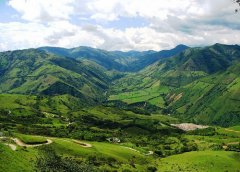
High quality Arabica Kenyamoca mint coffee
As long as it is delicious coffee, coffee consumers are willing to pay a high price; as long as delicious coffee is provided, consumers will not abandon coffee and the market will grow. High-quality coffee represented by boutique coffee is better than big business coffee producers and consumers have discovered this simple fact. In recent years, coffee producing countries no longer blindly pursue high output while neglecting quality.
2016-06-03 Quality high rabbi card seed mocha mint coffee if delicious